

07 Sep What Happens During a Robotic Hysterectomy?
A robotic hysterectomy removes the uterus through a few small incisions, with the surgeon controlling the robotic instruments from a console in the operating room. You are asleep under general anaesthetic throughout, and the operation often takes around an hour, although the time depends on the complexity of the surgery and the size of the uterus.
Key Takeaways
- You are under general anaesthetic for the whole operation, so you are asleep throughout.
- The surgeon works through small incisions and directs every movement of the robotic instruments.
- The uterus is commonly removed through the vagina, and any decision about the tubes or ovaries is made with you beforehand.
- Hospital stay varies, with many patients staying one to two nights.
What happens before the operation begins?
Before surgery starts, you are admitted, put to sleep with a general anaesthetic and positioned on the operating table.
- You are admitted to hospital, change into a gown and may speak with the surgeon and anaesthetist, as set out in what to expect on the day of surgery.
- The anaesthetist gives you a general anaesthetic, as described in RANZCOG’s hysterectomy patient information.
- While you are asleep, the team cleans the abdomen and positions your arms and legs carefully.
- A urinary catheter is commonly placed to keep the bladder empty during surgery.
How does the surgeon operate with the robot?
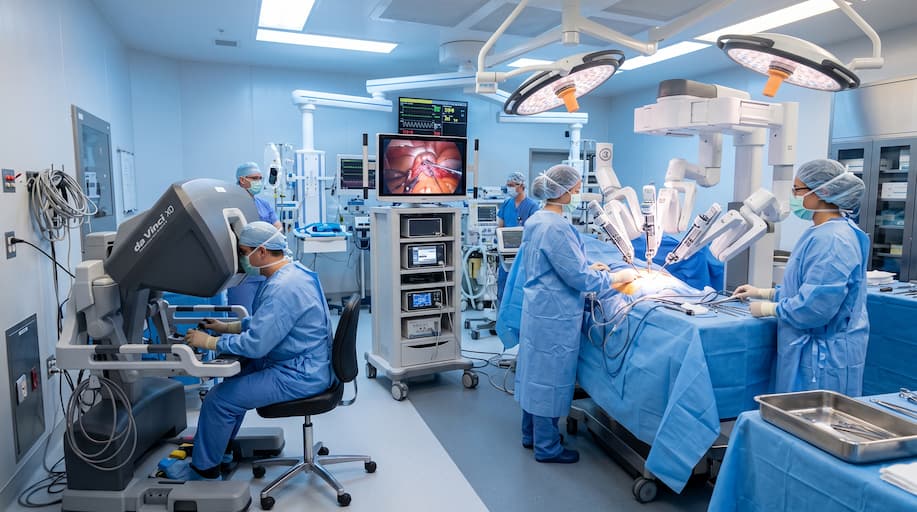
The surgeon controls the robotic instruments from a console in the operating room, working through a few small incisions in the abdomen. There are usually four to five incisions of around 8 to 10 millimetres for the standard da Vinci system, and the abdomen is gently inflated with gas to create room to work.
A camera and thin instruments are passed through these openings and attached to the arms of the robot. The surgeon views a magnified three-dimensional image and moves the instruments with hand controls. The robot does not operate on its own, and every movement is directed by the surgeon. How the robotic system works in gynaecology explains the equipment in more detail.
Robotic surgery is a form of laparoscopic (keyhole) surgery, which Healthdirect describes as passing a camera and instruments through small cuts in the abdomen. In selected cases, the same operation can be performed through a single small incision using the da Vinci SP (single port) system.
Single port robotic surgery represents the latest advancement in minimally invasive technology. Using the da Vinci SP system, surgeons can perform intricate operations such as a hysterectomy through a single small incision – often concealed within the belly button. This approach allows the robotic camera and instruments to be inserted through the same entry point, where they articulate and rotate with remarkable precision.
How is the uterus removed?
The surgeon detaches the uterus inside the abdomen and then removes it, commonly through the vagina.
- The surgeon separates the uterus from the tissues that hold it in place and seals its blood supply as the operation progresses.
- The uterus is taken out through the vagina or, in some cases, through one of the small abdominal incisions.
- In a total hysterectomy, the uterus and cervix are removed together and the top of the vagina is closed with stitches.
- Whether the fallopian tubes or ovaries are removed is a separate decision, made with you before surgery based on your age, symptoms and the reason for the operation. The ovaries are typically preserved in hysterectomy for benign conditions.
How long does a robotic hysterectomy take?
The operation itself typically takes around one hour. The time varies with the complexity of the procedure and the size of the uterus, and any additional procedures performed at the same time can add to it.
Your time in theatre and recovery is longer than the operating time, because it also includes the anaesthetic, preparation and waking up afterwards.
What happens straight after the surgery?
You wake up in the recovery area, where nurses monitor you while the anaesthetic wears off.
- Nurses give pain relief as needed.
- Most patients are encouraged to begin gentle walking as soon as it is safe.
- The length of stay varies, with many patients staying one to two nights.
- A follow-up appointment is usually arranged in the weeks after surgery to review your recovery.
The hours that follow the operation are covered in what to expect in the first 24 hours after robotic hysterectomy, and recovery time varies with the type of hysterectomy and your general health.
Talking through your own operation with Dr Kent
The steps above describe a typical robotic hysterectomy, but every operation is planned around your diagnosis, anatomy and general health. Your surgeon should explain the planned approach, which structures will be removed and what to expect before you give consent.
Dr Kent Kuswanto is a Melbourne specialist gynaecologist with high volume experience in robotic and minimally invasive hysterectomy procedures. To discuss your treatment options or seek a second opinion, contact Dr Kent Kuswanto’s team with your GP referral.